
Leading Chinese Woven Fabric Roll Supplier Strengthens Wholesale Distribution for Commercial Buyers
Linyi, Shandong, China – November 20, 2026
Choosing a China-based Woven Fabric Rollsupplier? It’s way more than just comparing prices. If you’re buying wholesale, you need consistent width, stable color, reliable finishing, and a production schedule that actually holds up. Here’s the thing: a fabric roll can look perfect on a sample card—then the full shipment shows up with noticeable differences. And those small inconsistencies? They matter. They can mess with your cutting plans, affect how garments fit, and lead to a whole lot of waste.So, the latest Materials Market Report from Textile Exchange is out, and it looks like global fiber production hit about 124 million tonnes in 2023. That’s up from 116 million tonnes the year before. And if their projections are right, we could be looking at 160 million tonnes by 2030. One thing to keep in mind though: these are fiber numbers, not Woven Fabric Roll output. So they don’t necessarily tell us how much actual supplier capacity there is. There’s a useful reminder in the research from University of Delaware’s Sheng Lu on textile and apparel trade: market data doesn’t tell the whole story on its own. So if you’re a buyer, don’t just take claims at face value — make sure they line up with product specs, recent test results, and shipment records.When you’re comparing suppliers, don’t just rely on the fancy showroom samples. You need to ask for the nitty-gritty: roll-width tolerances, fabric weight, fiber composition, colorfastness results, and how they handle inspections. And definitely get a production sample—those little swatches can be deceiving. When it arrives, check the roll edge and surface under the same lighting conditions. Then, before you commit, get the lead time and packing details in writing. Even then, something might slip through the cracks. That’s just how sourcing goes—it’s rarely perfect. When you’re looking for a dependable Woven Fabric Roll supplier in China, they shouldn’t just say they’re reliable — they need to show it. That means answering your questions without beating around the bush, giving you documents you can actually verify, and being upfront about what happens if a batch doesn’t meet spec. You know, the kind of clarity that makes you feel safe doing business.
 What Woven Fabric Rolls Are and How They Are Made
Woven Fabric Rolls are continuous sheets made by interlacing yarns at right angles. In aPp Woven Fabric Roll, the yarns are typically narrow strips of polypropylene. The lengthwise yarns are called warp; crosswise yarns are called weft. Their repeated crossings create a light, flexible fabric with useful strength.
Production begins by melting polypropylene resin and extruding it through a flat die. The film is cooled, slit into thin tapes, then stretched to improve strength. These tapes are wound onto bobbins and fed into a circular or flat loom. The loom interlaces them into fabric, which is inspected and wound into rolls. Some rolls receive a coating or laminate to reduce moisture penetration. That added layer changes the feel and can affect later printing or conversion.
A roll can look uniform yet hide uneven tension. Small differences may cause wrinkles during cutting or stitching. Buyers should check roll width, fabric weight, winding tightness, and visible defects against their intended use. Ask how measurements are taken, too. A clear inspection method makes comparisons more reliable, though no process removes every variation. The details matter.
Common Woven Fabric Types and Their Wholesale Uses
Common woven fabricsserve different wholesale needs.Plain-weave polypropylene fabric has a flat, stable surface and suits grain sacks, produce bags, and general packaging. The crossing yarns are easy to inspect. Simple, but useful. Twill fabric uses a diagonal pattern that can improve drape and resist abrasion in workwear, covers, and reusable bags. Canvas-style cotton or synthetic fabric is heavier, making it a practical choice for tool bags, equipment covers, and sturdy retail totes.
For outdoor packaging and protective covers, Hdpe Woven Fabric Roll is often selected for its light weight and useful tear resistance. Buyers may choose laminated or coated versions when added moisture protection is needed. Check the intended use: a fabric that works well for a pallet cover may feel too stiff for a flexible shopping bag. Width, weight, weave density, coating, and roll length all affect cutting, sewing, and shipping costs.
wholesale samples are worth handling before a large order. Feel the surface, inspect the selvedge, and ask for specifications that match the finished product.Small differences matter. A coating can change how fabric folds, while inconsistent roll tension may slow production. I would not rely on a product name alone; compare actual samples and confirm that the material performs under your working conditions.
Key Capabilities of Chinese Fabric Roll Suppliers
Chinese Woven Fabric Roll suppliers can support wholesale buyers with varied fiber blends, weave structures, widths, and roll lengths. Their capabilities matter most when specifications are clear. Share the target weight, such as 180 GSM, the usable width, and the intended application. Ask whether the supplier can provide a sample cut before bulk production. Small details count. Selvedge quality and shade consistency can affect cutting-room waste.A capable supplier should explain its production process and inspection points in plain language. Ask how workers check for broken yarns, uneven dyeing, or weaving flaws across each roll. Confirm the measurement method for width and fabric weight, since different methods can produce different results. Request batch records or inspection findings when available. Lead times, minimum order quantities, and packing details also deserve a written check. No supplier gets every detail right on the first sample. A thoughtful buyer leaves room to revise specifications after handling the fabric.Tips: Keep an approved fabric swatch and signed specification sheet. Compare bulk rolls against both before shipment. If a claim sounds broad, ask for a measurable example. That simple step can prevent an awkward surprise.
Key Capabilities of Chinese Woven Fabric Roll Suppliers
Fabric inspection capability: defect-length penalty points under the ASTM D5430 four-point system.
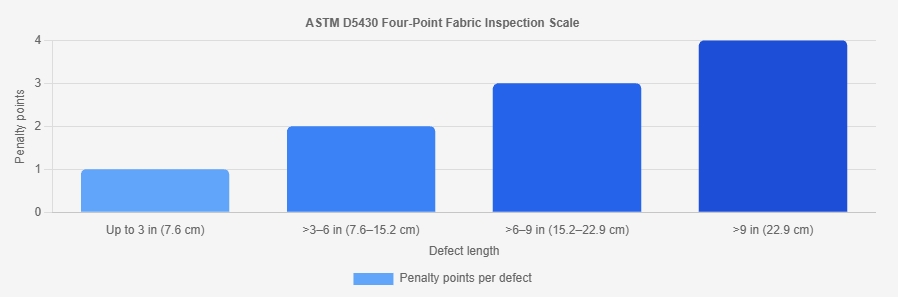
In this system, longer fabric defects receive higher penalty scores. Buyers can ask suppliers to document inspection results and clarify the scoring method used for each order.
How to Assess Quality, Certifications, and Production Capacity
Assessing a woven fabric supplier takes more than checking a smooth sample. Ask for the fabric specification, including yarn count, width, weight, and acceptable defect limits. Then compare a production-lot sample with the approved sample; shade and weave can shift between runs. Small differences matter. Textile Exchange’s Materials Market Report 2024 estimates global fiber production reached 124 million tonnes in 2023, highlighting the scale of material sourcing behind textile supply chains. That figure does not verify any supplier’s capacity, but it makes traceable material records worth requesting.Check certificates against the actual product, facility, and scope of work. A certificate for one material or site may not cover the roll you are buying. Request its current validity details, and confirm any claims through the issuing organization’s verification process. For production capacity, ask for recent output records, loom availability, typical lead times, and the largest repeat order completed. A factory visit or live production check can reveal practical details: weaving lines running, rolls labeled by lot, and inspection records beside the packing area. Numbers can look tidy on paper. I would still ask how delays and rejected rolls are handled, since capacity figures alone miss the messy part. For aWhite Woven Fabric Roll order, agree on inspection criteria before production, not after the shipment arrives.
China Best Woven Fabric Roll Supplier for Wholesale Buyers? — How to Assess Quality, Certifications, and Production Capacity
Use this due-diligence checklist to compare woven-fabric suppliers. Set product-specific acceptance limits before sampling; the standards and records below help verify claims but do not guarantee that every fabric is suitable for every application.
| Assessment Area | What to Check | Evidence to Request | How to Assess |
|---|---|---|---|
| Fiber composition | Fiber types and declared percentages, such as cotton, polyester, or blended content. | Product specification, purchase-order description, and a relevant fiber-content test report. | Confirm that the tested composition matches the product description and applicable labeling requirements. |
| Fabric construction | Weave type, yarn details, finished width, and mass per unit area (GSM). | Technical data sheet and measurements from a production-representative sample. | Agree written tolerances for width and GSM in advance; compare incoming rolls using a consistent sampling plan. |
| Tensile strength | Fabric strength in the warp and weft directions. | Test report identifying the sample, test method, direction, results, and test date. | ISO 13934-1 describes the strip method for determining maximum force and elongation at maximum force of textile fabrics. Set pass limits according to end use. |
| Color fastness to washing | Color change and staining after laundering under specified conditions. | Test report stating the washing procedure and results for color change and staining. | ISO 105-C06 specifies methods for assessing color fastness to domestic and commercial laundering. Choose the test conditions that reflect the intended care process. |
| Color fastness to rubbing | Color transfer during dry and wet rubbing. | Report showing dry and wet rubbing results and the method used. | ISO 105-X12 covers color fastness to rubbing. Agree acceptable ratings based on fabric color, use, and customer requirements. |
| Pilling and surface appearance | Resistance to pilling and changes in fabric surface after abrasion. | Report with test method, test conditions, and rating scale. | ISO 12945-2 describes a modified Martindale method for determining fabric propensity to surface fuzzing and pilling. Compare results using the same conditions and rating scale. |
| Inspection and defect control | Holes, stains, weaving defects, shade variation, roll length, and roll-to-roll consistency. | Inspection procedure, sample inspection records, roll labels, and any agreed defect classification. | Define acceptable defect limits, shade-grouping rules, inspection frequency, and remedies for nonconforming rolls in the purchase agreement. |
| Chemical or sustainability claims | Any claimed restricted-substance testing, recycled content, or environmental certification. | Current certificate or test report showing the holder, scope, product coverage, issuing body, and validity period. | Verify the document with its issuer where possible. Confirm that the exact material and production site are covered; a certificate does not replace product-specific testing. |
| Quality-management system | Documented controls for incoming materials, production checks, nonconformities, and corrective actions. | Relevant quality procedures, audit evidence, and a valid management-system certificate if claimed. | Check the certificate’s scope, site, issuing body, and validity. Assess whether the documented controls match the fabric and processes being purchased. |
| Production capacity | Available output for the requested construction, color, finish, and delivery schedule. | Capacity statement by product type, current production schedule, equipment or process overview, and recent order references where available. | Request capacity in a defined unit and time period, distinguish total capacity from available capacity, and confirm the quantity and lead time with a trial order. |
| Lead time and order planning | Sample timing, bulk production time, minimum order quantity, and shipment readiness. | Written quotation and production schedule identifying approval, production, inspection, and dispatch milestones. | Confirm when the lead-time clock starts, what can cause delays, and how changes to color, finish, or quantity affect the schedule. |
| Traceability and roll packing | Ability to identify fabric lots and link rolls to production and inspection records. | Example roll labels, lot records, packing list, and traceability procedure. | Check that roll identification, shade or dye-lot information, measured length, and shipment documents are consistent. |
Buyer’s note: Request a production-representative sample and approve a written specification before placing a bulk order. Standards describe test methods; they do not establish a universal pass grade for every fabric or end use.
Comparing Pricing, Minimum Orders, and Shipping Options
China Best Woven Fabric Roll Supplier for wholesale Buyers?Comparing Pricing, Minimum Orders, and Shipping OptionsA useful supplier comparison starts with an identical specification: weave, fiber content, width, weight, finish, and roll length. A low price per meter can hide setup charges, short rolls, or costly packing. Ask for quotes at two quantities, such as a trial order and a regular production order. Small lots cost more. That trade-off is easy to overlook when comparing headline prices.Tips: Request the minimum order quantity by color and fabric construction, not just by total order. Confirm sample fees, production lead time, roll tolerances, and how damaged or short rolls are handled. For shipping, compare air, sea, and consolidated options using the same delivery address and cargo details. Check whether the quote includes inland transport, insurance, and destination charges; “shipping included” can mean different things.Freight timing deserves attention. UNCTAD’s Review of Maritime Transport 2024 reports that maritime trade grew 2.4% in 2023, while ton-miles increased 4.2%, reflecting longer routes. These figures do not predict a specific shipment, but they show why a fixed delivery estimate may need a buffer. Ask for the shipment’s packed dimensions and gross weight before booking. A practical landed-cost sheet should show fabric, packing, freight, and local charges separately. One quote may still be incomplete.
Steps for Selecting and Working With a Wholesale Supplier
Selecting a woven-fabric supplier starts with a written specification, not a price list. Define material, weave, width, weight per square metre, roll length, core diameter, edge finish, and tolerances. For Hdpe Fabric Roll, also specify UV treatment and intended exposure; “outdoor grade” alone is too vague. Request a physical sample, then check its weight, dimensions, weave consistency, and coating. Ask for relevant test reports and confirm which production batch they cover. Textile Exchange’s Materials Market Report 2024 estimates global fibre production reached 124 million tonnes in 2023, underscoring the scale and complexity of material sourcing. That figure is context, not proof of any supplier’s quality.
Before placing a wholesale order, verify production capacity, minimum order quantity, lead time, and how defects are handled. Ask for a dated production schedule and written confirmation of packaging details, such as roll labels and moisture protection. Start with a pilot quantity when feasible. Inspect rolls at receipt, measuring several points rather than trusting one convenient sample. Keep notes and photos tied to batch numbers; they make quality discussions more precise. A spreadsheet cannot reveal every inconsistency. I’d also ask whether a quoted tolerance is realistic across a full run, since this detail is easy to overlook. Agree on inspection criteria before payment and document any changes to the specification in writing.
PP Woven Bags: Market Insights Informed by Smithers’ Global Packaging Trends Report
Low Price New Empty Customized Disposable Ordinary Flexographic Printing PP Woven Bag
As packaging demand continues to expand, suppliers are balancing cost, practical performance, and clear product communication. Smithers’ *The Future of Global Packaging to 2028* valued the worldwide packaging market at approximately US$1.17 trillion in 2023 and forecast growth to around US$1.42 trillion by 2028, a compound annual growth rate of 3.9%. This outlook highlights the importance of packaging formats that can serve varied applications while supporting recognizable, informative product presentation.PP woven bags offer a practical option for packaging needs across different sectors. Made from polypropylene or polyethylene, they combine a functional woven structure with a specially treated surface compatible with common printing processes. Logos, product names, and promotional messages can be printed in clear, durable patterns, helping products stand out and strengthening brand recognition. A range of printing colors and customized designs also allows businesses to adapt the bags to different product types and packaging requirements, while retaining an economical packaging format.
Conclusion
Choosing the right Woven Fabric Roll supplier in China starts with understanding how woven fabrics are made: yarns are interlaced on looms, then finished to meet requirements for texture, strength, color, and end use. Wholesale buyers can compare options such as cotton, polyester, blended, and specialty fabrics for apparel, home furnishings, bags, and industrial applications. A capable supplier should offer suitable materials, consistent production, customization, clear communication, and dependable quality control.Before placing an order, assess fabric samples, specifications, relevant certifications, manufacturing capacity, and the supplier’s ability to maintain consistency across batches. Compare pricing alongside minimum order quantities, sample costs, packaging, lead times, and shipping choices rather than judging offers by unit price alone. A practical process is to define your requirements, request samples and written quotations, confirm production details, agree on inspection expectations, and keep communication clear from approval through delivery.
About Us
Founded in 2018 and headquartered in Linyi, Shandong Province, Linyi Silk Road International Trade Co., Ltd. is an enterprise integrating the research and development, production, sales and service of woven bags, jumbo bags and other packaging products.
Media Contact
Company Name: Linyi Silk Road International Trade Co., Ltd.
Contact Person: Media Relations
Email: Send Email
Country: China
Website: https://www.slwovenbag.com/

